
Foreign Influence Threats Targeting Harvard University
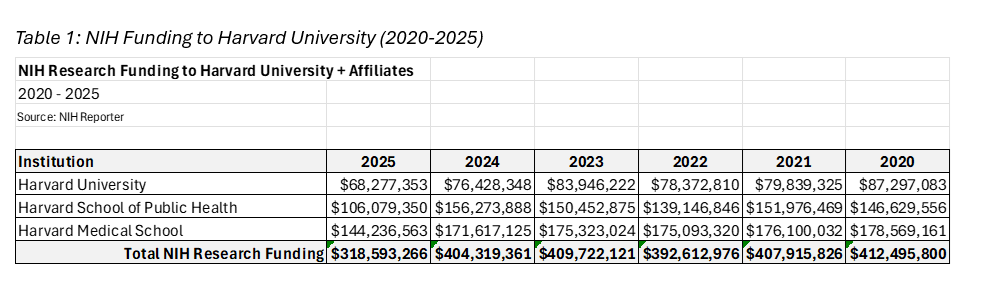
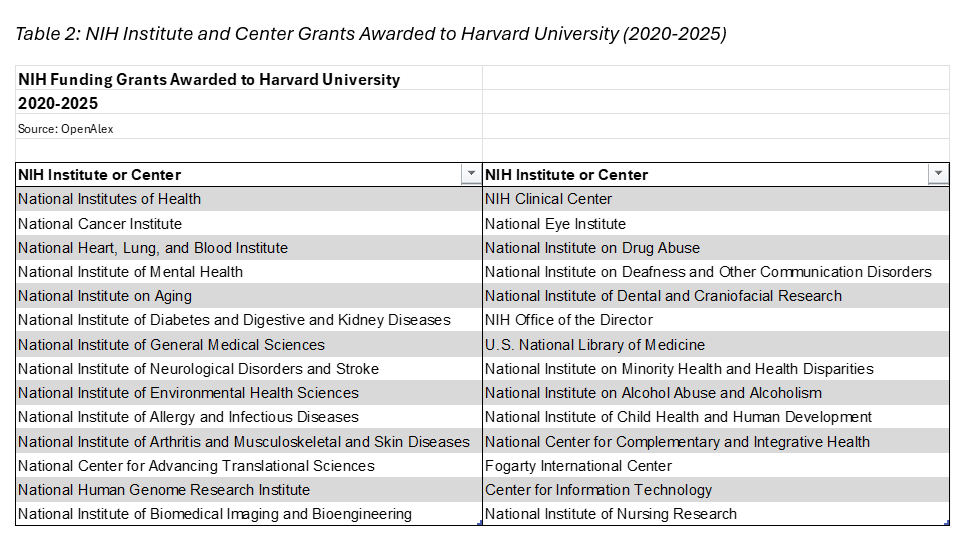
Harvard University has received over $2.3 billion [1] from 28 National Institutes of Health (NIH) entities [2] since January 2020 for biomedical and public health research, as outlined in Tables 1 and 2 below. The federally funded research has led to cutting-edge technology discoveries and applied scientific advancements, resulting in patents, commercial licensing deals, and spinoff companies for Harvard University and its research teams. Unfortunately, the NIH-funded research at Harvard also attracted foreign influence threats interested in stealing the research data, technologies, and intellectual property.
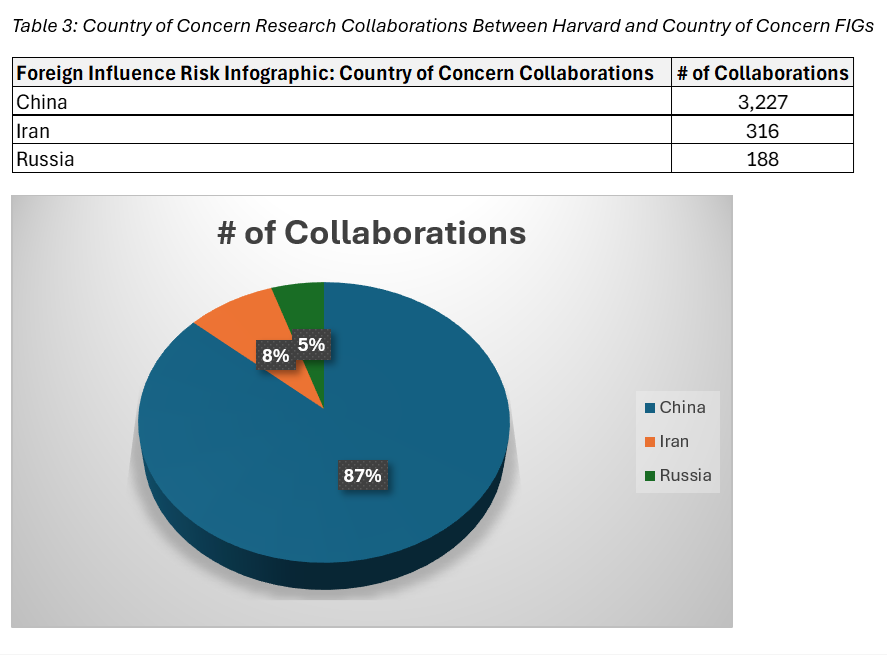
A review of the foreign influence risk analysis concluded that foreign adversaries, including China, Russia, and Iran, have targeted researchers from Harvard University, Harvard’s School of Public Health, and Harvard’s Medical School to gain access to NIH-funded projects, possibly resulting in the theft of research assets. IPTalons leveraged open-source data from publicly available sources (e.g., OpenAlex) to analyze journal articles published to identify research collaborations between Harvard-affiliated researchers and foreign researchers from China, Russia, and Iran. IPTalons identified that Harvard researchers were targeted by more than 600 foreign influence groups, or FIGs, from China, Iran, and Russia.
Sun Yat-sen University [3], a high-risk research university in China that is deeply involved in civilian-military research projects for the Chinese People’s Liberation Army (PLA), was the most aggressive FIG working against the Harvard researchers, with more than 220 high-risk collaborations. In total, more than 2,000 NIH-funded Harvard researchers collaborated with researchers affiliated with one or more high-risk FIGs from January 2020 to December 2025. IPTalons defines High-Risk FIGs as “…foreign (non-U.S.) research institutions known or suspected to be involved in military, civilian-military, dual-use, or defense industrial base technology research.” [4]
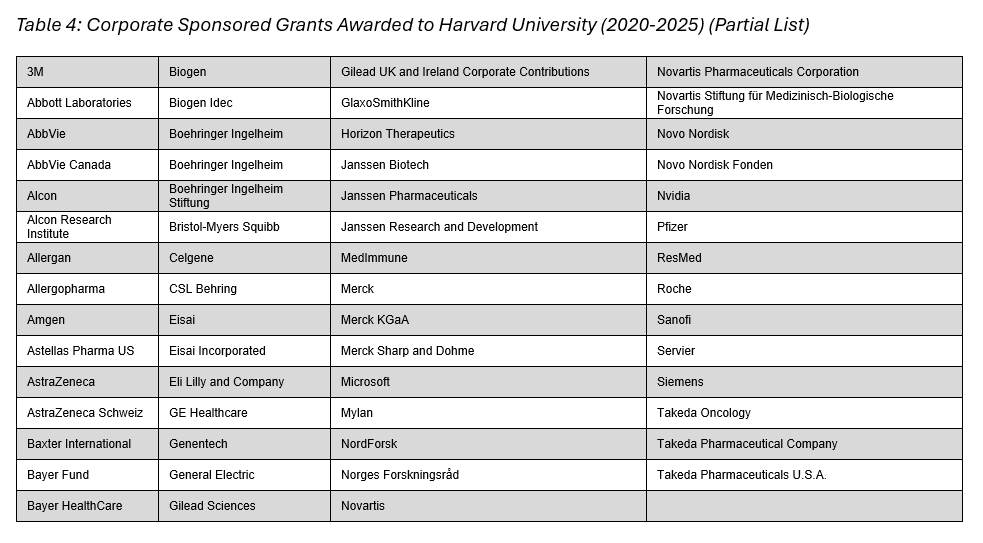
Adding to the complexity of Harvard University's foreign influence risk management concerns, over 160 Harvard researchers had High-Risk foreign research collaborations that received research funding from one or more Corporate Sponsors, including top companies in the biotechnology and healthcare industries [5].
There are federal guidelines, rules, and regulations relating to research security and the proper handling of research assets to protect the confidentiality and integrity of U.S. government-funded research, including the National Security Presidential Memorandum 33 (NSPM-33) and the CHIPS and Sciences Act of 2022. Harvard University, as the grant awardee and recipient of significant NIH research funding, assumes fiscal and risk-management responsibilities when its researchers, aka Principal Investigators, agree to conduct the research. Similarly, Harvard also must protect the intellectual property interests of the corporations and other entities that hire the university’s faculty to research, as specified in proprietary contracts and agreements.
Foreign Influence Groups (FIGs) represent a significant risk to the confidentiality and integrity of federally and corporate sponsor-funded research programs. Harvard University must comply with the NSPM-33 requirements and the terms and conditions specified in the grant agreement with NIH. The requirements included hiring a qualified research security officer, training principal investigators on research security and how to protect research assets from foreign adversaries, and proactively managing their foreign influence risks. Federal funding agencies, such as the NIH, have a responsibility to audit grant recipients to ensure compliance with the federal guidelines and regulations.
Given the extent and scale of FIG's targeting of Harvard researchers, there may be gaps in Harvard’s research security program and in NIH’s oversight of its grant programs. Harvard University should consider a third-party assessment of its research security program to close any gaps and protect the confidentiality and integrity of its research, including NIH-funded, corporate-sponsored, and Harvard-funded research.
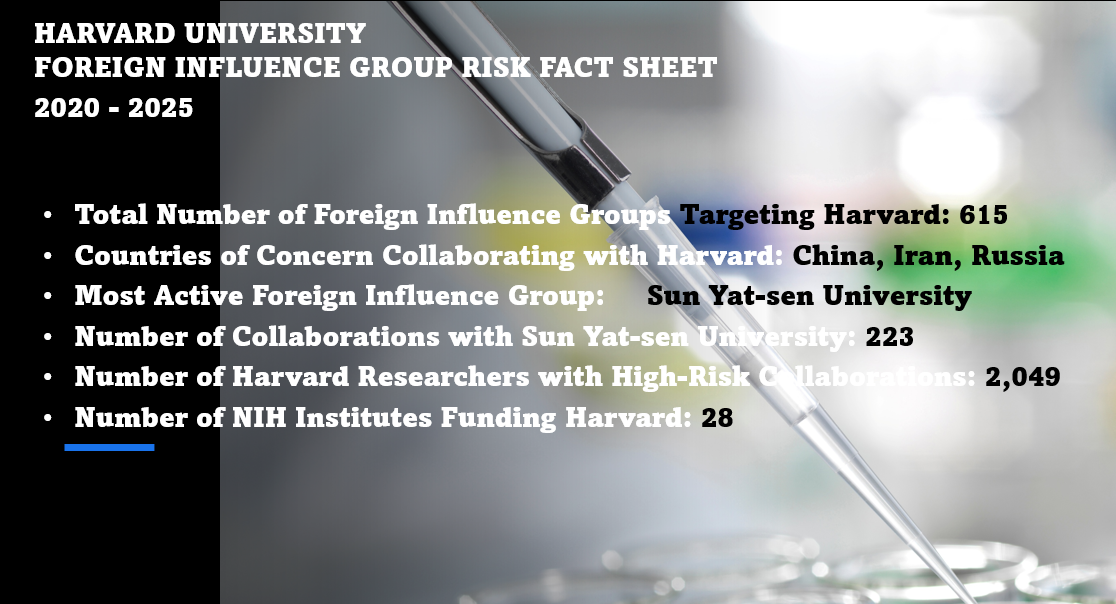
Infographic 1: Harvard University Foreign Influence Risk Fact Sheet
Reference Citations
[1] https://reporter.nih.gov/
[2] https://openalex.org/
[3] https://chinaselectcommittee.house.gov/media/press-releases/new-investigative-report-uncovers-billions-in-taxpayer-money-used-to-fund-chinese-military-apparatus#:~:text=In%20a%20third%20example%2C%20a,conducts%20research%20for%20the%20PLA.
[4] https://www.iptalons.com/insights/foreign-influence-threats-targeting-harvard-university - Infographic 1
[5] https://www.iptalons.com/insights/foreign-influence-threats-targeting-harvard-university - Table 5